

NEWS
LTO Batteries vs. Traditional Lithium-Ion: Which One is Right for Your Energy Needs?
Release time:
2025-03-03
Choose LTO batteries if you prioritize safety, long lifespan, and rapid charging. Choose Li-ion batteries if your priority is energy density and weight efficiency for mobile applications.
As energy storage technology continues to evolve, businesses and consumers face an important choice: Should they opt for Lithium-Titanate (LTO) batteries or traditional Lithium-Ion (Li-ion) solutions? Each technology has its strengths, making them suitable for different applications. In this article, we will compare LTO batteries and traditional Li-ion batteries in terms of performance, lifespan, efficiency, and safety to help you determine which is best for your specific energy needs.
Key Differences Between LTO and Li-Ion Batteries
1. Lifespan and Cycle Life
- LTO batteries can withstand 20,000+ charge cycles, significantly outperforming Li-ion batteries, which typically last 2,000–5,000 cycles.
- For applications requiring long-term reliability, such as grid storage and public transport, LTO is the better choice.
2. Charging Speed
- LTO batteries can achieve full charge in just 10–15 minutes, whereas Li-ion batteries take 1–4 hours.
- This makes LTO ideal for electric buses, emergency power systems, and industrial machinery that require fast turnaround times.
3. Safety and Stability
- Unlike Li-ion batteries, which are prone to thermal runaway, LTO batteries operate safely under extreme temperatures (-30°C to 60°C) and are non-flammable.
- This makes them perfect for applications in harsh environments such as aerospace, military, and cold-weather energy storage.
4. Energy Density
- Traditional Li-ion batteries have higher energy density, making them better suited for consumer electronics and portable devices.
- However, for stationary energy storage and high-power applications, LTO’s trade-off in energy density is compensated by superior longevity and performance.
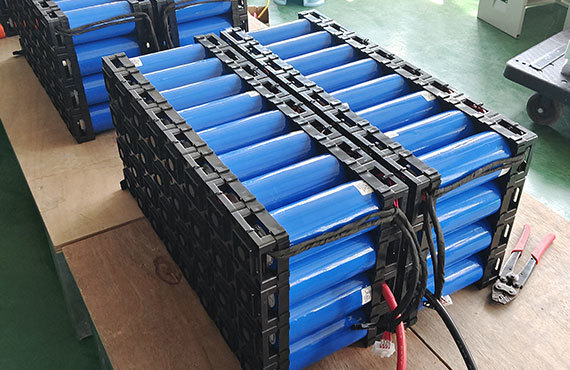
Which Battery is Right for You?
- Choose LTO batteries if you prioritize safety, long lifespan, and rapid charging.
- Choose Li-ion batteries if your priority is energy density and weight efficiency for mobile applications.
Relevant information


Main office: Room 501, Building 3, No. 81, Dingye Road, Tangjiawan Town, High-tech District, Zhuhai City, Guangdong Province, China 519000
Manufacturing Center:Zhongneng Science Park, No. 168, Tanlong North Road,Tanzhou Town, Zhongshan, China
R&D and Sales Center in Oxford, UK:47,The Lawns, Kennington Road,Radley,Oxfordshire, UK, OX14 2JR
SAF Coolest v1.3.1.2 设置面板 GAGSD-ZGYF-JFAVE-ZQZ
无数据提示
Sorry, the current column is being updated, please look forward to it!